Science News
 American
Science News for 30 August 2017
American
Science News for 30 August 2017
Virus that causes mono may increase risk of MS for multiple races
Science Daily - 30 Aug 2017 23:21
Like whites, Hispanic and black people who have had mononucleosis, commonly known as mono, which is caused by Epstein-Barr virus, may have an increased risk of multiple sclerosis (MS), according to a new study.
Concerns regarding radioactivity in migratory seafood negated
Science Daily - 30 Aug 2017 21:55 New research shows negligible risk from consumption of meat from migratory marine predators following Fukushima nuclear disaster.
Protecting the guardians
Science Daily - 30 Aug 2017 21:55 A guardian gene that protects against type 1 diabetes and other autoimmune diseases exerts its pancreas-shielding effects by altering the gut microbiota. Experiments in mice born with the protective gene show that exposu...
Lego-like vacuum robot climbs walls and sorts your Tupperware
New Scientist - 30 Aug 2017 21:00
The first robots in your home probably won't look like Terminator, instead they'll be little odd-job loving plug-and-play suckers like these ones
Hidden pockets of turbulent gas fuel stars in far-off galaxies
New Scientist - 30 Aug 2017 20:41
Galactic winds once thought to slow star formation may be driving the creation of new stars in distant galaxies, challenging long held believes about galaxy evolution
Bioengineering a functional vascularized lung scaffold
Science Daily - 30 Aug 2017 20:12 A team of researchers is the first to successfully bioengineer a functional lung with perfusable and healthy vasculature in an ex vivo rodent lung. Their new approach allows the removal of the pulmonary epithelium while ...
Gut bacteria that 'talk' to human cells may lead to new treatments
Science Daily - 30 Aug 2017 20:12 Scientists developed a method to genetically engineer gut bacteria to produce molecules that have the potential to treat certain disorders by altering human metabolism.
Human blood and skin cells used to treat Parkinson's in monkeys
New Scientist - 30 Aug 2017 20:00
For the first time, stem cells from adults rather than embryos have relieved Parkinson's symptoms in monkeys. A trial is now being prepared for people
Weird ancient burst of light in the sky turns out to be a nova
New Scientist - 30 Aug 2017 20:00
Six centuries ago, Korean astronomers recorded a bright spot in the night sky. A 25-year hunt for that star has settled a debate about how classical novae behave
World's biggest X-ray laser opens vast research vistas
Phys.org - 30 Aug 2017 19:50 A sleek, subterranean X-ray laser to be unveiled Friday in Germany, by far the most powerful in the world, has scientists in a dozen fields jostling to train its mighty beam on their projects.
Fatal AI mistakes could be prevented by having human teachers
New Scientist - 30 Aug 2017 19:28
Artificial intelligences make many mistakes as they learn, which could be dangerous in driving or healthcare. Now human teachers could help them avoid errors
Blunting CRISPR's 'scissors' gives new insight into autoimmune disorders
Science Daily - 30 Aug 2017 19:22
A research team has used a modified version of the gene-editing technique CRISPR to find enhancers -- not by editing them but by prompting them into action.
Powerful resource to advance treatment of pediatric solid tumors
Science Daily - 30 Aug 2017 19:22
St. Jude Children's Research Hospital is offering the global scientific community no-cost access to an unprecedented collection of pediatric solid tumor samples and data to fuel research and move treatment forward.
Motorized molecules drill through cells
Science Daily - 30 Aug 2017 19:22 Motorized molecules that target diseased cells may deliver drugs to or kill the cells by drilling into the cell membranes. Scientists have demonstrated them on cancer and other cells.
Blood test can predict early lung cancer prognosis
Science Daily - 30 Aug 2017 19:22
Cancer cells obtained from a blood test may be able to predict how early-stage lung cancer patients will fare, a team of researchers has shown.
Neural networks meet space
Symmetry Magazine - 30 Aug 2017 19:08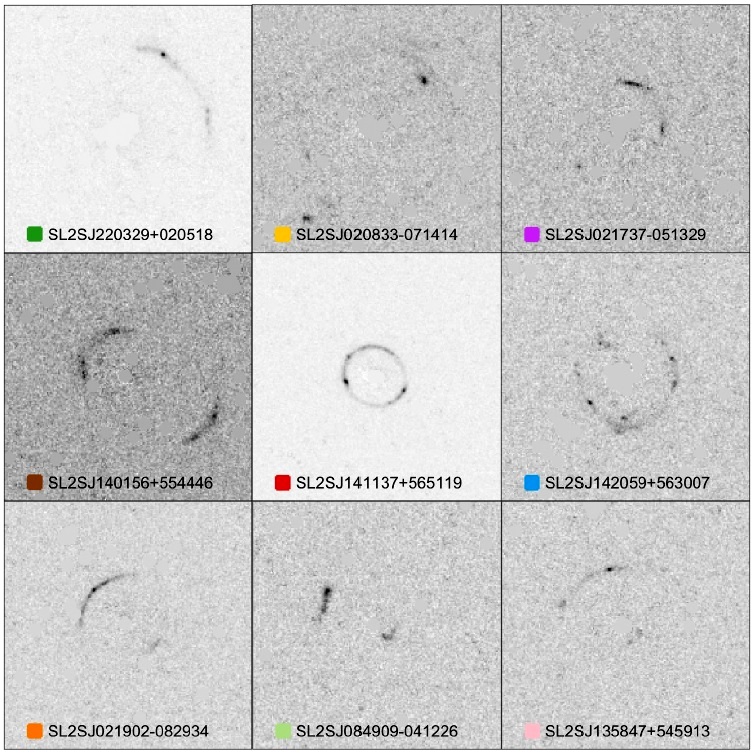 Artificial intelligence analyzes gravitational lenses 10 million times faster. Researchers from the Department of Energy's SLAC National Accelerator Laboratory and Stanford University have for the first time shown that n...
We've just seen 15 new mysterious cosmic radio bursts from space
New Scientist - 30 Aug 2017 19:08
Breakthrough Listen detected more radio pulses from the famous repeating source FRB 121102. They're higher frequency than previous ones but we still don't know what causes them
Brazil rejects bid to drill for oil near unique Amazon reef
New Scientist - 30 Aug 2017 18:57
Total has had its drilling licence turned down, with Brazil's environment agency saying the French oil giant has failed to address the environmental risk of oil spills
Millennials prefer healthy habits, less likely to choose opioids to manage pain
Science Daily - 30 Aug 2017 18:49
Often spending their days hunched over phones, tablets or computers and their free time at spin class or playing sports, millennials are the next generation poised to experience chronic pain. Even at their young age, mil...
Federal preemption of taxes on state and local sugar-sweetened beverages is not warranted
Science Daily - 30 Aug 2017 18:49
Federal and state government can alter or hinder state and local activity through a legal mechanism called preemption -- when a higher level of government blocks the action of a lower level of government. A new study eva...
We've seen how our brains file away memories for the first time
New Scientist - 30 Aug 2017 18:45
You may be daydreaming, but your brain is hard at work. When we rest, our brains' hippocampi regions replay new memories, filing them away for long-term storage
Nobody knows how these baby stars got so close to our black hole
New Scientist - 30 Aug 2017 18:30
A group of stars orbits so close to the Milky Way's black hole that they could have never formed there. But they're too young to have been born further away
 Global
 Great Britain
 Indian
 South Africa